
Protect Your Home from Wildfires
WILDFIRE FUELS REDUCTION
Wildfire risk is a reality for homeowners and property owners throughout the Bighorn Basin. The combination of dry summers, high winds, dense vegetation, and rugged terrain means that properties in and around Powell, Cody, and the surrounding foothills and canyon areas can be vulnerable — and the best time to prepare is before fire season, not during it.
Thin Air Tree Service provides professional wildfire mitigation and defensible space services designed to reduce the fuel sources around your home, protect your structures, and improve access for emergency response if a fire does reach your property.
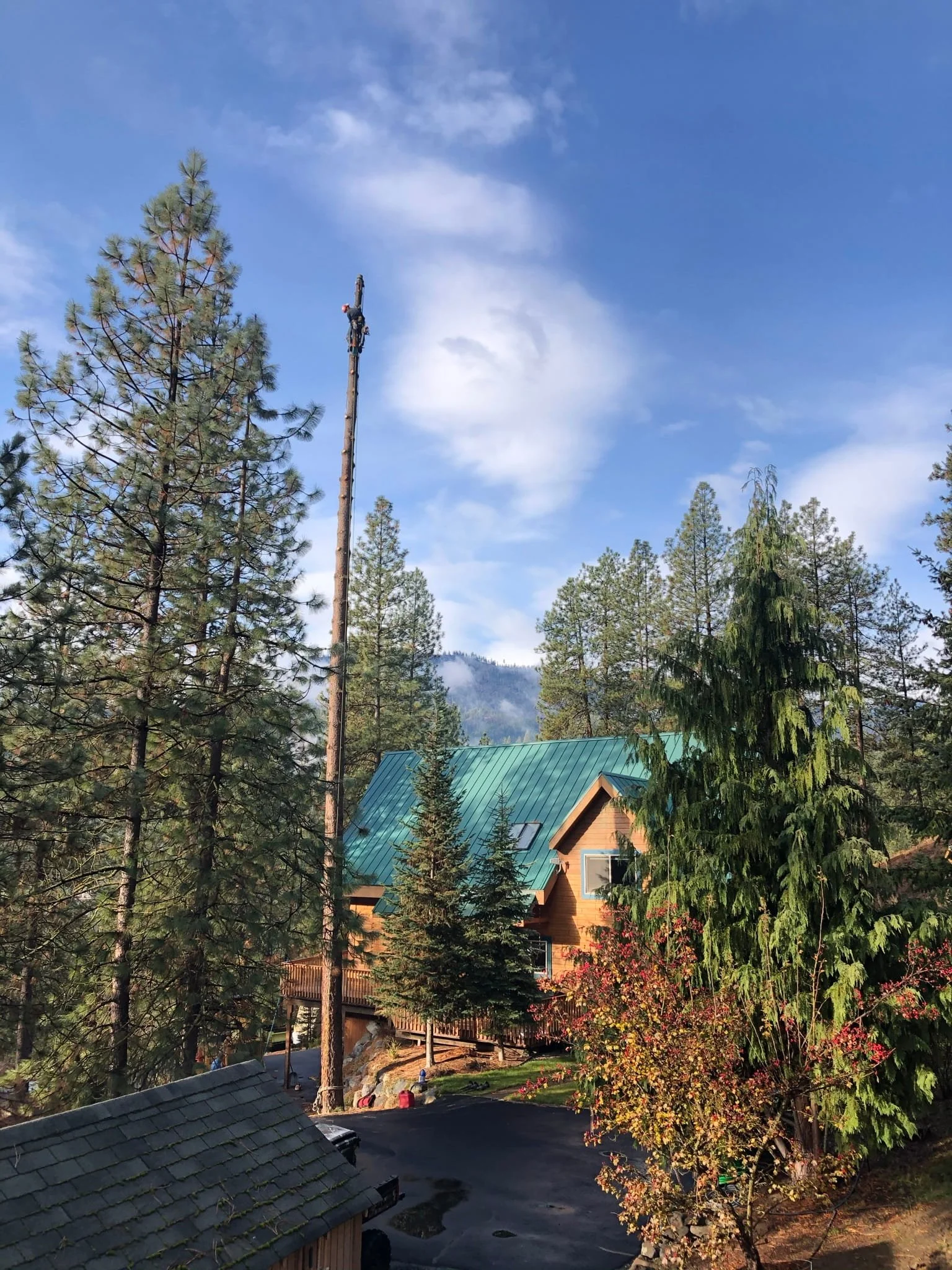
What Is Defensible Space and Why Does It Matter?
Defensible space is the buffer zone between your home and the surrounding vegetation that gives firefighters a safe area to work and slows the spread of fire toward your structures. Research consistently shows that homes with well-maintained defensible space have significantly better survival rates during wildfires. Creating and maintaining that space requires more than mowing — it requires strategic vegetation management by someone who understands how fire moves through a landscape.
Our Wildfire Fuels Reduction Services Include
Selective tree removal — removing high-risk, dead, dying, or poorly positioned trees that could act as torches or fall on structures during a fire
Tree thinning — reducing tree density to slow fire spread and limit crown-to-crown fire travel through your property
Ladder fuel removal — pruning lower limbs to prevent ground fire from climbing into the tree canopy, one of the most critical steps in defensible space creation
Dense brush and shrub clearing — removing or reducing shrubs, brush piles, and overgrown vegetation that act as fast-burning fuel sources
Dead wood and debris removal — clearing accumulated deadfall, slash piles, and dry debris that ignite easily and burn hot
Access route clearing — ensuring driveways, gates, and emergency access points are clear so fire crews can reach your property and you can evacuate safely
Wyoming-Specific Wildfire Risk
Properties in the foothills, canyon areas, and rural stretches surrounding Cody and Powell face elevated wildfire risk due to the region's dry climate, seasonal wind patterns, and the prevalence of juniper, sagebrush, and dry grass that ignite quickly and carry fire fast. Even properties that don't feel like they're "in the woods" can be at significant risk when conditions are right. Proactive vegetation management is one of the most effective steps you can take to protect your home and your family.
Our Approach
We understand that your property is more than a fire risk calculation — it's your home, your land, and your investment. Our goal is to create meaningful fire resilience while preserving the natural character of your property as much as possible. We don't clear-cut. We work selectively and strategically, removing what needs to go and leaving what can stay, so your property looks cared for rather than stripped.
Every wildfire mitigation job includes complete debris cleanup and haul-off. We leave your property clean, clear, and significantly safer than we found it.
Why Choose Us
Wildfire mitigation isn't just brush clearing — it requires understanding how fire moves through a landscape, which vegetation poses the greatest risk, and how to create meaningful protection without stripping your property. Here's why property owners in Powell, Cody, and the Bighorn Basin trust Thin Air Tree Service with their defensible space:
ISA Certified Arborist on staff — every mitigation job is evaluated by someone who understands tree biology, fire risk, and how to make the right cuts for long-term results
Local knowledge — we know the species, terrain, and seasonal fire conditions specific to the Bighorn Basin, including the elevated risk in foothills and canyon areas around Cody
Strategic, not destructive — we work selectively to remove the highest-risk vegetation while preserving the natural look and health of your property
Full-service cleanup — all debris, brush, and slash is hauled off your property after every job, eliminating the fuel sources that mitigation work is meant to remove
Experience with all fuel types — juniper, sagebrush, dense brush, ladder fuels, deadfall, and overgrown understory — we know what needs to go and why
Documentation provided — we can provide written records of work performed for insurance purposes or future reference
Locally owned — we live and work in this region and have a personal stake in keeping our communities fire-resilient
Related Services: Hazard Tree Assessment, Tree Removal, Tree Pruning & Trimming, Site Cleanup & Wood Hauling
Wildfire Fuels Reduction FAQs
-
Defensible space is the buffer zone between your home and the surrounding vegetation that slows the spread of fire and gives firefighters a safe area to work. Homes with well-maintained defensible space have significantly better survival rates during wildfires. In the Bighorn Basin — where dry summers, high winds, and dense vegetation create elevated fire risk — creating and maintaining that space is one of the most important things a property owner can do.
-
Most fire safety guidelines recommend a minimum of 100 feet of defensible space around structures, broken into zones. Zone 1 (0–30 feet) should be the most aggressively managed — low, well-spaced vegetation, no dead wood, and no ladder fuels. Zone 2 (30–100 feet) focuses on reducing fuel density — thinning trees, removing dead material, and creating spacing that slows fire spread. Properties in high-risk areas around Cody and the foothills may benefit from extending that buffer further.
-
Ladder fuels are low-growing vegetation — shrubs, brush, and lower tree limbs — that allow a ground fire to climb up into the tree canopy. Once fire reaches the canopy it spreads rapidly and becomes extremely difficult to control. Removing ladder fuels by pruning lower limbs and clearing dense understory vegetation is one of the most effective and cost-efficient wildfire mitigation steps you can take.
-
Juniper and sagebrush are among the most flammable and fast-burning vegetation types common in the Bighorn Basin — both ignite easily and carry fire quickly across a landscape. Dry grass, accumulated deadfall, and dense brush piles are also high-risk fuel sources. Dead or dying trees of any species are a significant hazard and should be removed as a priority.
-
Thin Air Tree Service operates seasonally from early spring through late fall — typically March/April through October/November, weather permitting. Early in the season is ideal for wildfire mitigation work so your property is prepared well before peak fire season in summer. Don't wait until conditions are already dry and windy — by then the risk is already elevated.
-
No — and that's not the goal. Effective defensible space is about strategic vegetation management, not clear-cutting. We work selectively to remove the highest-risk trees and vegetation while preserving the natural character of your property. Well-spaced, healthy trees with cleared understory and no ladder fuels are far less of a fire risk than dense, overgrown vegetation — and your property can still look natural and cared for after the work is done.