
Tree Pruning & Trimming Services in Powell, Cody & the Bighorn Basin
TREE PRUNING & TRIMMING
Healthy trees don't happen by accident — they're the result of consistent, proper care. Thin Air Tree Service provides professional tree pruning and trimming for homeowners and property owners throughout Powell, Cody, and the greater Bighorn Basin. Whether you're maintaining a single shade tree or managing multiple trees across a rural property, we bring the same careful, methodical approach to every job.
Tree pruning and trimming is one of the most important things you can do to protect both your trees and your property. Removing dead, damaged, or overgrown branches reduces the risk of failure during Wyoming's high winds, heavy snow loads, and storm events. Left unmanaged, weak or overcrowded branches can become serious hazards — falling on roofs, fences, vehicles, or power lines. Regular pruning also promotes healthy growth, improves tree structure, and significantly extends the life of your trees over time.
Why Tree Pruning & Trimming Matters
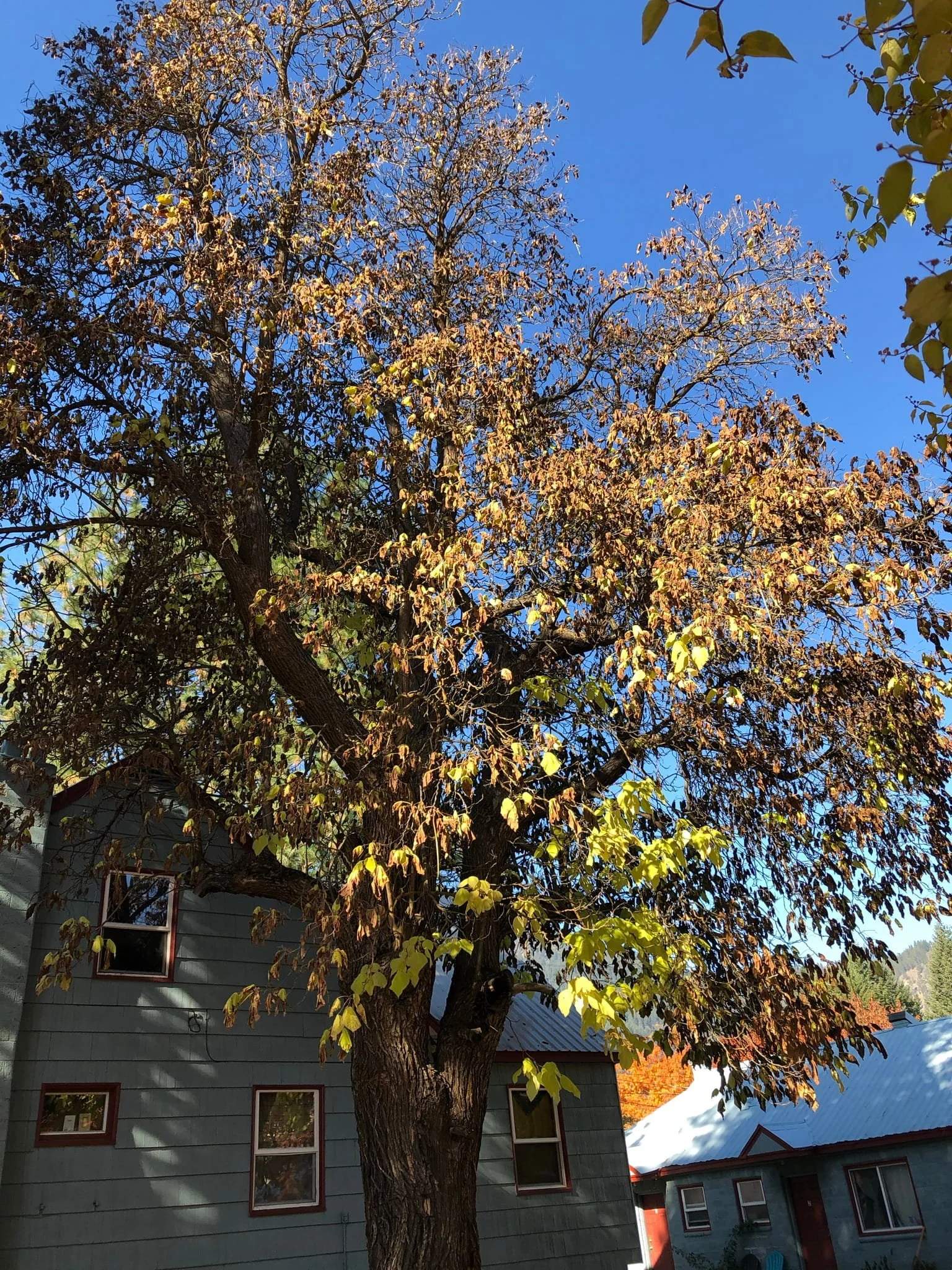
Before
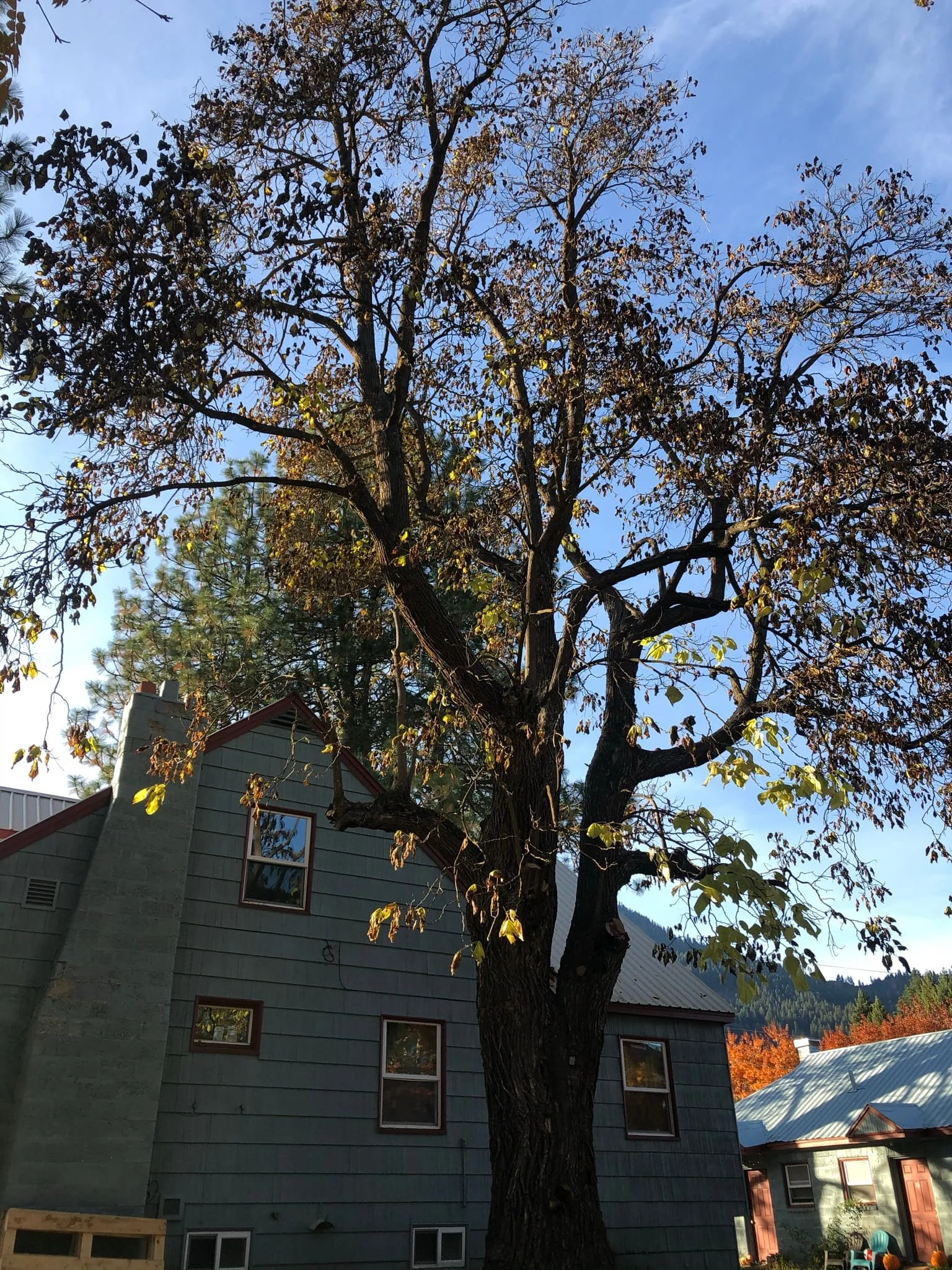
After
What We Trim & Why
Every tree is different, and so is every pruning job. At Thin Air Tree Service, we tailor each service to the specific needs of the tree and the property. Common pruning and trimming services we provide throughout Park County and the Bighorn Basin include:
Dead & damaged branch removal — eliminating hazardous limbs before they become a problem
Clearance trimming — removing branches overhanging roofs, gutters, driveways, walkways, and outbuildings
Storm & wind damage pruning — cleaning up broken or hanging branches after severe weather
Structural pruning — shaping younger trees for long-term health, balance, and stability
Utility line clearance — trimming branches away from power lines and electrical infrastructure
Vista & view pruning — selectively thinning canopy to open up views without harming the tree
Safe, Careful Pruning That Protects Your Trees
Bad pruning can do more harm than good. Over-cutting, improper cuts, and topping are some of the most common mistakes that weaken trees and shorten their lifespan. At Thin Air Tree Service, we follow industry-standard pruning practices to ensure every cut is made in the right place, at the right time, for the right reason. Our goal is always to leave your trees healthier, more balanced, and better equipped to handle whatever Wyoming weather throws at them.
We provide tree pruning and trimming services to residential and rural property owners throughout the Powell and Cody, Wyoming area, including Meeteetse, Byron, Lovell, and surrounding Bighorn Basin communities. No property is too large or too remote — we're familiar with the terrain and the unique challenges that come with trees in this region.
Tree Trimming Services Across the Bighorn Basin
Why Choose Thin Air Tree Service for Tree Pruning
Pruning done wrong can permanently damage a tree — improper cuts, wrong timing, and over-pruning are among the most common causes of tree decline and failure. When you hire Thin Air Tree Service, you're getting a team that understands tree biology, not just someone with a saw.
ISA Certified Arborist — every pruning job is evaluated for what the tree actually needs, not just what's easiest to cut
Serving Powell, Cody, and the greater Bighorn Basin — we know the species, soil, and seasonal conditions that affect trees in this region
Pruning for health, safety, clearance, and appearance — whether you need deadwood removed, canopy lifted, or a tree shaped for long-term structure, we match the work to the goal
Experience with trees near structures, power lines, and utility infrastructure — clearance pruning in tight spaces requires precision; we have the equipment and technique to do it safely
Methodical, industry-standard pruning practices on every job — proper cut placement, no topping, no lion's tailing, no shortcuts that compromise the tree's long-term health
Seasonal timing matters — we prune at the right time of year for each species to minimize stress, reduce disease risk, and promote healthy regrowth
Locally owned — we know Wyoming trees and Wyoming weather, and we treat every property like our own
Related Services: Hazard Tree Assessment, Tree Removal, Wildfire Mitigation, Site Cleanup & Wood Hauling
Tree Pruning & Trimming FAQs
-
Timing depends on the species and the goal. In the Bighorn Basin, late winter to early spring — just before new growth begins — is ideal for most deciduous trees. Pruning while trees are still dormant minimizes stress, reduces exposure to insects and disease, and sets the tree up for a strong growing season. Some species, like flowering trees, are best pruned right after they bloom. Dead, hazardous, or storm-damaged branches can and should be removed any time of year regardless of season.
-
Pruning focuses on the long-term health and structure of the tree — removing dead, diseased, or crossing branches, improving canopy airflow, and making cuts that support how the tree grows over time. Trimming is typically more about appearance and clearance — shaping a tree, lifting the canopy off a roofline, or keeping branches away from power lines and structures. Both require proper technique to avoid damaging the tree.
-
Most mature trees benefit from a professional pruning every 3–5 years. Younger trees may need more frequent attention to establish good structure early. Trees near structures, power lines, or high-traffic areas may need annual clearance work. Wyoming's wind and snow load can also accelerate the need for deadwood removal — a heavy snow on a dead limb is a liability waiting to happen.
-
In many cases, yes. Removing dead, diseased, or structurally compromised branches can reduce the spread of decay, improve the tree's ability to allocate resources to healthy growth, and extend its life significantly. Whether pruning is the right solution depends on the extent of the damage — we'll give you an honest assessment during your estimate.
-
Topping is the practice of cutting a tree's main branches back to stubs — often done to reduce height quickly. It's one of the most harmful things you can do to a tree. Topping causes massive wounds that trees struggle to close, invites decay and disease, triggers weak regrowth that's more hazardous than the original canopy, and ultimately shortens the tree's life. Thin Air Tree Service does not top trees. If height reduction is your goal, we use crown reduction techniques that achieve a similar result without compromising the tree's health or structure.