
Storm Damage & Emergency Tree Removal Services
EMERGENCY TREE SERVICE
Storm-damaged and hazardous trees can pose an immediate risk to your home, vehicles, power lines, and personal safety — and when that happens, you need a team that responds fast and works safely. Thin Air Tree Service provides prompt, professional storm damage tree removal and emergency hazard tree services throughout Powell, Cody, and the greater Bighorn Basin.
Wyoming weather is unpredictable. High winds, heavy snow loads, ice storms, and rapid temperature swings can weaken, split, uproot, or partially topple even healthy-looking trees with little warning. When a tree becomes a hazard, every hour matters.
What We Handle
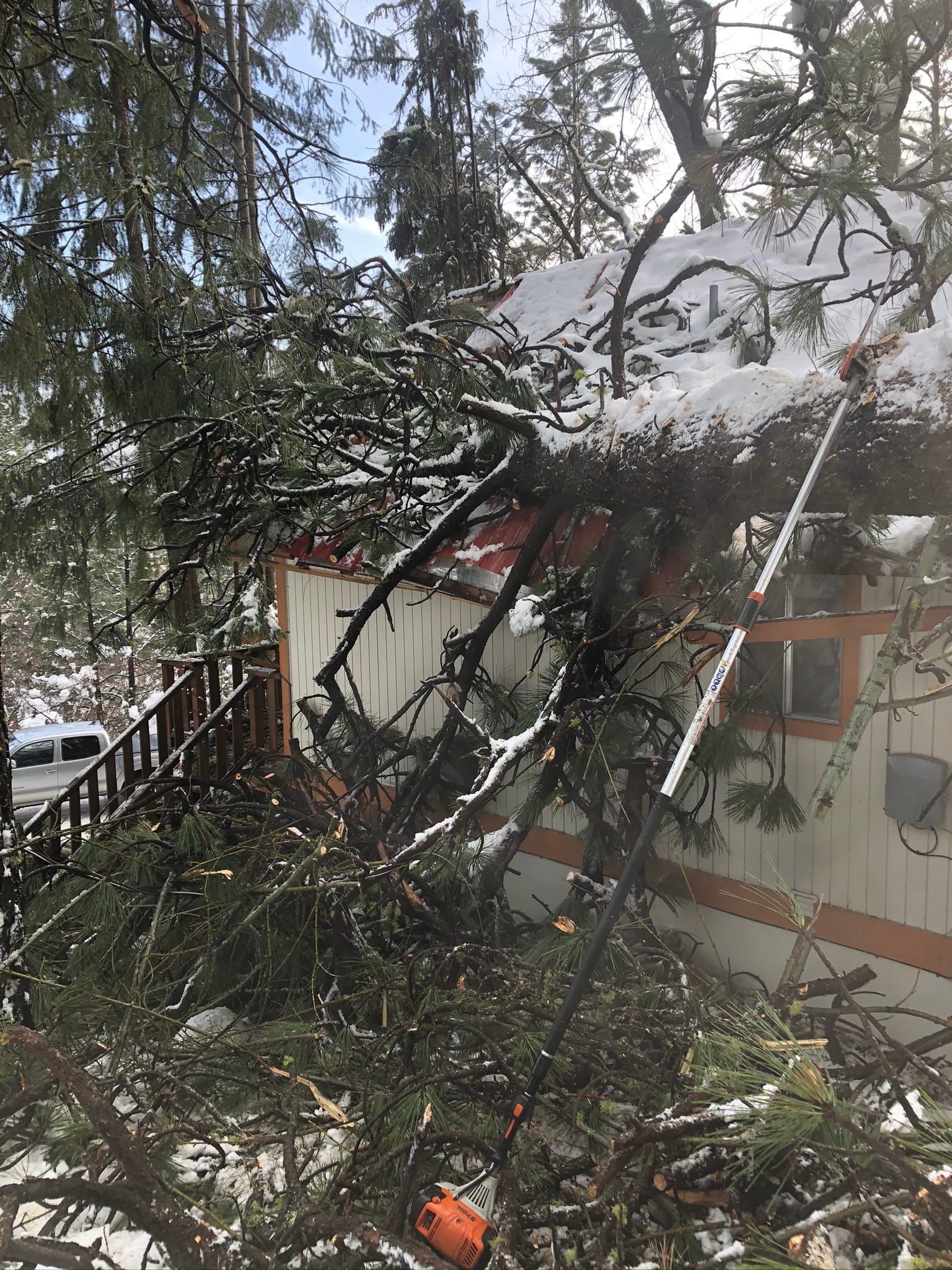
Trees split, uprooted, or toppled by wind, snow, or ice storms
Leaning trees threatening homes, fences, sheds, or vehicles
Hung trees lodged in other trees after a storm
Trees blocking driveways, roads, or access points
Hazard trees weakened by decay, disease, or root damage
Trees in contact with or near power lines (we coordinate with utility companies as needed)
Partial failures — limbs or tops that have broken but not fully fallen
Our Approach to Emergency Tree Work
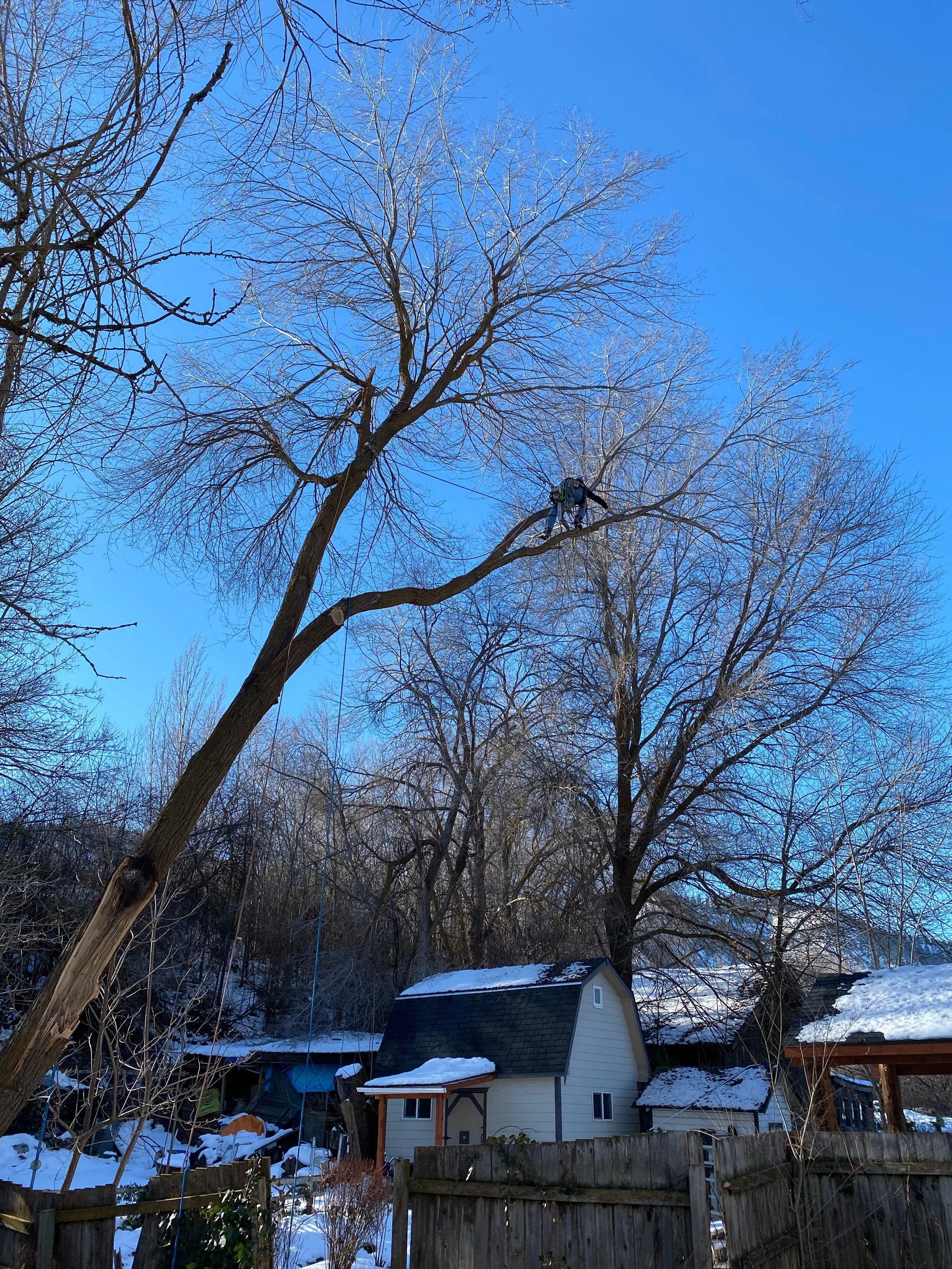
High-risk removals require the right equipment, the right technique, and calm, experienced hands. We assess each situation carefully before we cut — evaluating lean, weight distribution, anchor points, and escape routes — so every removal is executed safely, even under difficult conditions. We don't rush. We work efficiently and deliberately, because a hazard tree demands respect.
Once the immediate danger is addressed, we handle complete debris cleanup and haul-off so your property is clear and safe when we leave.
When to Call for Emergency Service
If you are unsure whether your situation qualifies as an emergency, here is a simple guide. Call us right away if:
A tree or large branch has fallen on a structure, vehicle, or road
A tree is leaning heavily and could fall at any moment
Power lines are involved or nearby
Someone could be hurt by a falling tree or branch
Your home is not accessible because of a fallen tree
If the tree has fallen in an open area and no one is at risk, it may not need immediate attention. In that case, you can call us during regular hours and we will schedule a time to remove it. Either way, do not try to handle a fallen tree yourself — chainsaws and heavy wood are dangerous, and trees under tension can behave unpredictably.
Working With Your Insurance Company
Storm damage tree removal is often covered by homeowner's insurance. We work with insurance companies regularly and can provide the documentation you need for your claim — including photos of the damage, a written description of the work performed, and detailed invoices. We are happy to work directly with your adjuster to make the process as straightforward as possible.
Prevent Further Emergencies
The best way to avoid a tree emergency is regular maintenance. Dead branches, weak limbs, and structurally unsound trees can all be identified and addressed before a storm hits. Our tree pruning and hazard tree assessment services help you identify and resolve potential problems before they become emergencies.
Why Thin Air Tree Service for Storm Response
Prompt response to storm damage and hazard tree calls
ISA Certified Arborist evaluates every job for safety and best approach
Experience with high-risk, technical removals near structures and utilities
Insurance documentation provided — photos, written descriptions, and detailed invoices
Proper equipment for trees of all sizes and situations
Clear communication from assessment through cleanup
Locally owned — we serve our neighbors, not a call center
We understand storm damage is stressful and often completely unexpected. Our goal is to make the process as straightforward as possible — show up, assess honestly, work safely, and leave your property better than we found it.
Related Services: Tree Removal, Hazard Tree Assessment, Site Cleanup & Wood Hauling
Emergency Tree Service FAQs
-
We prioritize storm damage and hazard tree calls and work to respond as quickly as conditions allow. Response time depends on weather, road conditions, and call volume following a major storm event — Wyoming storms can affect a wide area simultaneously. Call us at 307-202-3241 and we will assess the situation to determine the best course of action.
-
Yes — a tree on a structure is one of the most urgent situations we respond to. We use careful rigging and controlled sectional removal to take the tree down without adding stress or dropping weight onto your roof or walls. If there is structural damage, we coordinate with you, your contractor, or your insurance adjuster as needed and provide full documentation to support your claim. Do not attempt to cut or move the tree yourself — trees on structures are under unpredictable tension and can shift suddenly. Call us immediately at 307-202-3241 and we'll assess the situation safely.
-
A hung tree — sometimes called a widow maker — is a tree or large branch that has partially fallen and become lodged in the canopy of another tree. It can look stable but is extremely unpredictable. Any movement of the surrounding trees, wind, or additional weight can cause it to drop without warning. Hung trees should never be approached by untrained individuals. We have the equipment and experience to safely dislodge and remove hung trees in Powell, Cody, and throughout the Bighorn Basin.
-
In many cases, yes — particularly when a tree has fallen on a structure, vehicle, or is blocking access to your home. Coverage varies by policy, so contact your insurance provider as soon as possible after the damage occurs to start your claim. Thin Air Tree Service works with insurance companies regularly and can provide everything your adjuster needs: photos of the damage, a written description of the work performed, and detailed invoices. We're happy to work directly with your adjuster to make the process as smooth as possible.
-
A tree situation is an emergency when there is immediate risk to people, structures, or access — a tree on your home, vehicle, or blocking a road; a tree leaning and ready to fall; power lines involved; or someone at risk of injury. If a tree has fallen in an open area away from structures, it can typically wait for regular scheduling. When in doubt, call us and describe the situation — we'll help you determine the urgency.